
Multimakers/Leyline: Distributed Manufacturing Platform
Additional Media
The Challenge
COVID-19 exposed catastrophic supply chain fragility. While coordinating PPE delivery to hospitals across four states, every connection, quality check, and shipment required manual coordination. Global supply chains couldn't respond to rapid demand shifts, yet distributed manufacturing capacity existed without infrastructure to organize it. The challenge was building a platform that could certify quality, match makers with buyers, and enable resilient local production at scale.
What I Built
Multimakers (2020):
- Distributed manufacturing platform connecting individuals and micro-factories with buyers needing certified PPE and consumer goods
- Two open-source respirator designs: 3D-printed Elevons mask (N95-equivalent, NIOSH tested) and thermoformed Turtle mask for mass production
- Web prototype with maker certification system, client ordering interface, order tracking, and distributed fulfillment logistics
- Kickstarter campaign with product roadmap, budget breakdown, and stretch goals for AR QA tools and lifecycle analysis
- Secured physician endorsements (Princeton Radiology, Partners HealthCare)
Leyline Pivot (2021):
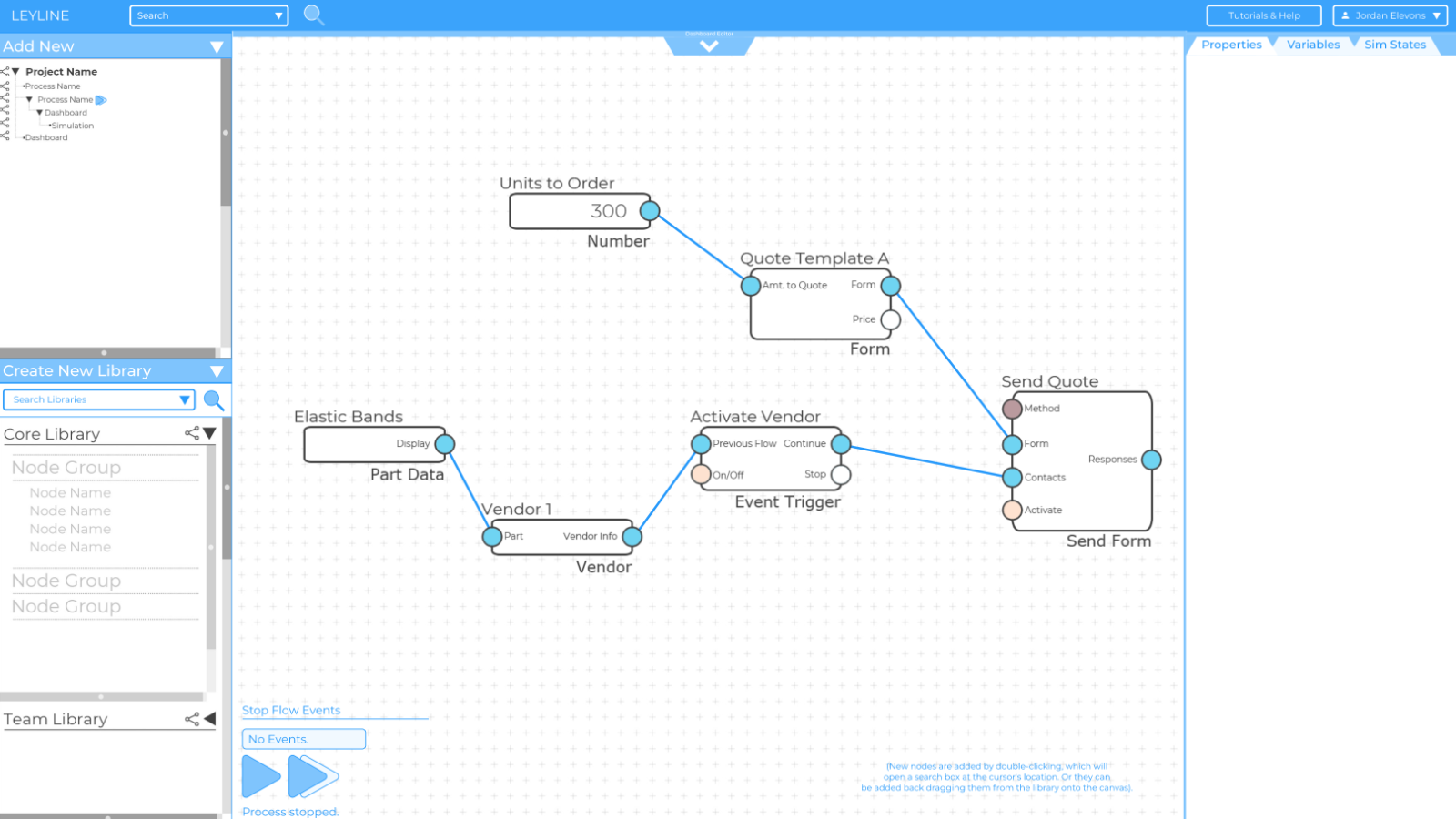
- Supply chain resilience software built on three pillars: Create (intuitive chain design), Simulate (digital twin testing), Evolve (automated disruption response)
- Node-based interface for modeling automated responses to supply disruptions
- Simulation environment for testing cascading second and third-order failures
- Carbon emissions and energy tracking throughout product lifecycles
- Business model: Freemium SaaS targeting 2M+ US manufacturing/retail SMBs
- Investor pitch: $810K raise, 2-year ROI projection
- Assembled advisory team including Fabio Bressan, PhD (SpaceX, Formula 1 collaborations)
Result
Kickstarter raised $2,832 from 23 backers (5% of $175K goal). Campaign validated demand for distributed manufacturing but revealed the chicken-and-egg challenge of building a two-sided marketplace without existing supply or demand density.
Pivoted to Leyline to focus on supply chain intelligence software rather than physical maker networks. Developed investor pitch and advisory team, but ultimately did not secure funding.
Both respirator designs released as open source. Key learning: solving supply chain fragility requires both distributed capacity AND predictive coordination tools—the pandemic proved acute demand existed, but building either solution required overcoming cold-start problems (Multimakers) or competing in an established enterprise software market during economic uncertainty (Leyline).